I walked out of the gun store with a suppressor and no tax stamp
For most of my adult life, owning a suppressor in America meant one thing: a government errand. You’d buy the can, then spend months watching the ATF’s waiting room do nothing, then pay a $200 tax, then get fingerprinted and photographed and registered like the loudness of a gun was itself a crime against the state.
It’s still like that in some places. It is not like that in my state.
And I am still not fully over it.
The thing that changed
Back a few years, the NFA’s whole architecture — the tax, the registry, the approval process — was propped up on one idea: Congress gets to tax transfers of NFA items. Then two big things happened.
First, Congress zeroed out the tax stamp as part of a budget bill. Cancelled. The “tax” that justified the whole apparatus no longer existed.
Second, and this is the fun one: the industry actually sued the ATF (Silencer Shop Foundation v. ATF being the big one) and won — injunctions that stopped the ATF from enforcing NFA approval/registration/tax-stamp requirements on suppressors (and SBRs, SBSs, and AOWs). The ATF itself put it in writing: it would no longer require the NFA treatment for these.
The result is a glorious, infuriating, completely sane patchwork:
- Banned in a handful of states, where suppressors are still illegal outright.
- Still NFA in a block of states that kept the Form-4 process.
- Free in the rest — where a suppressor is now just a normal firearm purchase: a Form 4473 background check, like buying any rifle.
I live in one of the free ones. And I’m not going to tell you which, because the beauty of it shouldn’t be reduced to a map coordinate.
The same-day suppressor
So a couple weeks ago I walked into a shop, filled out a standard Form 4473, paid $9 for the background check, and walked out the same afternoon carrying a Dead Air Mojave 9.
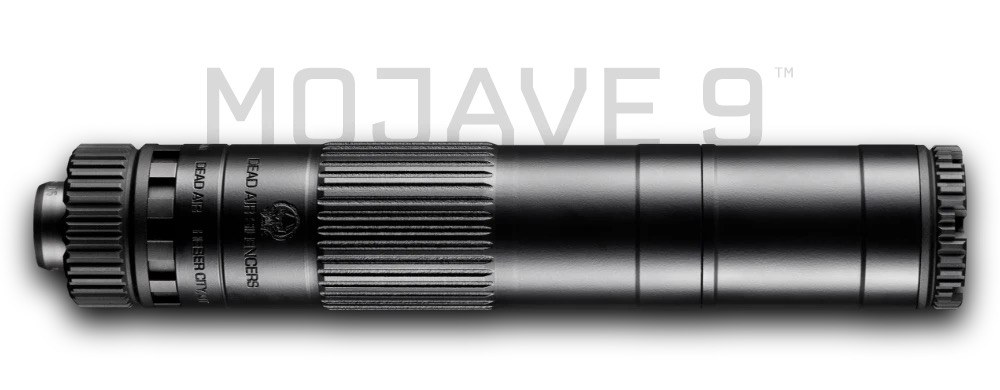
No months-long wait. No $200 stamp. No fingerprint card. No registry entry. The entire government-mandated drag that used to hang over this purchase — gone, overnight, by court order.
Let me make sure we pause on that, because my brain still does a double-take: the device that was once the most over-governed thing a civilian could own just became a slightly pricier box on the shelf. And it’s DMLS-printed titanium, modular, and rated for full-auto.
The host it’s going on
The can is 9mm, and it has a very specific date with a very specific host:
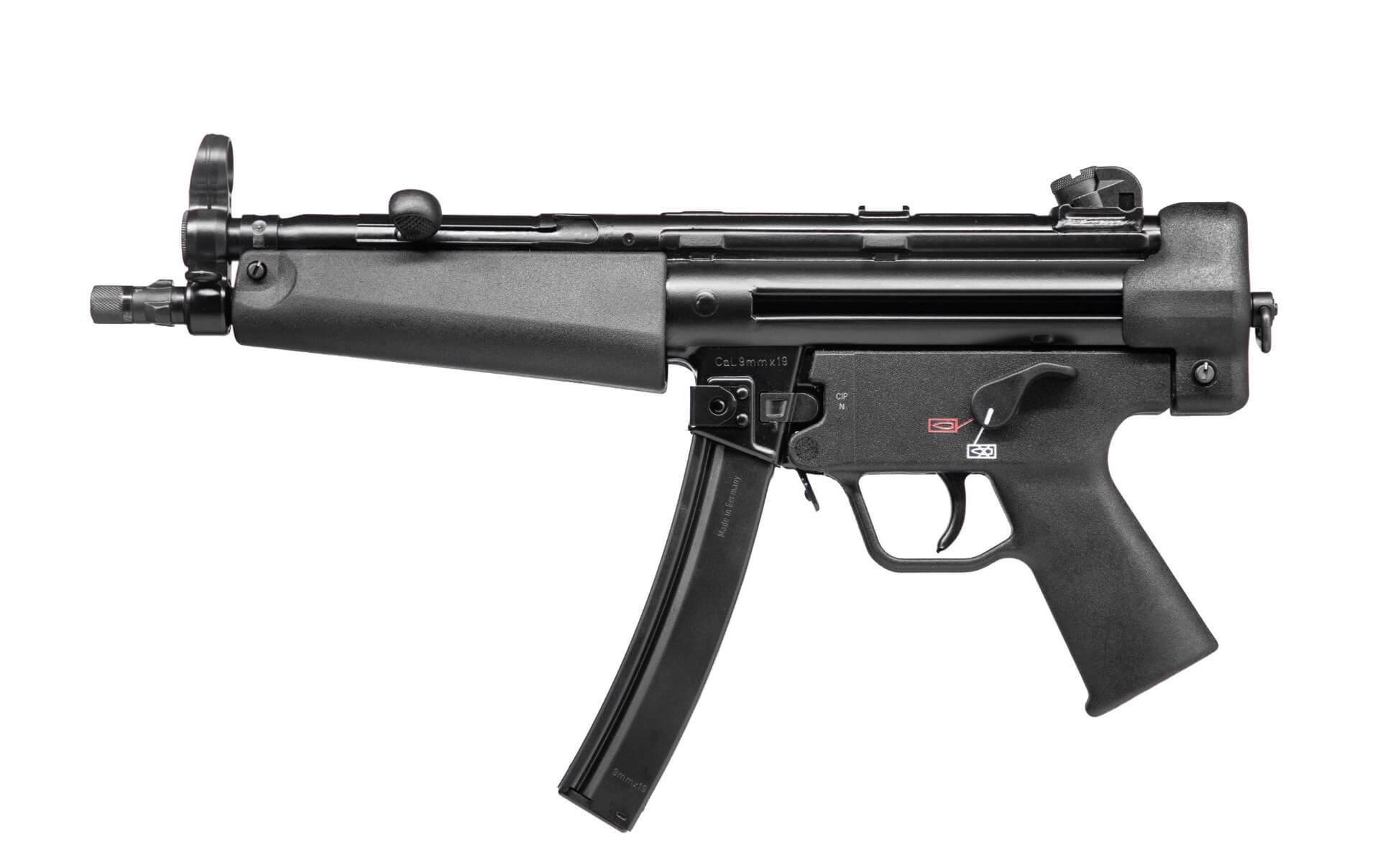
That’s an HK SP5 — the civilian twin of the legendary MP5, 9mm, with that gloriously weird roller-delayed blowback action. The SP5 leaves the box as a pistol, which is its own annoyance; mine has since been legally converted to a short-barreled rifle — and that was done the old-fashioned way, with a Form 4 and a tax stamp, back when that was still the only option for any of this. So I’ve paid the NFA toll once, and skipped it once. I’ve seen both sides of the fence, and my backyard has better grass.
Sitting on top is a Trijicon red dot — because a rifle this good-looking deserves an optic that measures up, and because a rolled-delay 9mm at indoor distances doesn’t need a 10x scope to ruin a silhouette’s day.
Why I’m still wired about it
I haven’t shot the thing yet. That’s the whole story — the anticipation, not the receipts. Everything’s screwed together, torqued, doted, and waiting.
What I’m looking forward to most is the sound: a suppressor on a rolled-delay 9mm is a different animal than on a straight-blowback gun. The action still makes its signature thunk-clack — the bolt and rollers doing their mechanical business — but the muzzle blast drops to somewhere near a loud handshake instead of a thunderclap. It’s the closest the shooting world gets to “I can actually hear myself think at the range.”
That first magazine is going to answer a lot of questions I’ve been turning over since the day I decided to do this. And there’s a real satisfaction in knowing nobody had to wait fourteen months for me to find out.
The morale (you knew it was coming)
For a century, a suppressor was treated like a state secret wearing a $200 tax. The “tax” funded the paperwork; the “paperwork” existed to make the tax unbearable. Strip the talley, and suddenly the thing was just… a tube you screw on a barrel. As it always should’ve been.
My first range trip is coming. Until then, the Mojave 9 sits in the safe next to a Form 4 I paid for once and a background check that cost me nine dollars — and I keep opening the safe door just to look at it, like it’s going to sprout wings and the government’s going to notice and take it back.
It won’t. That’s the part I’m still getting used to.